A guard on a pole
The Remote Security Agent put a video agent on a mast with lights and a loudspeaker. The idea is older than it looks; the part that talks back is new.
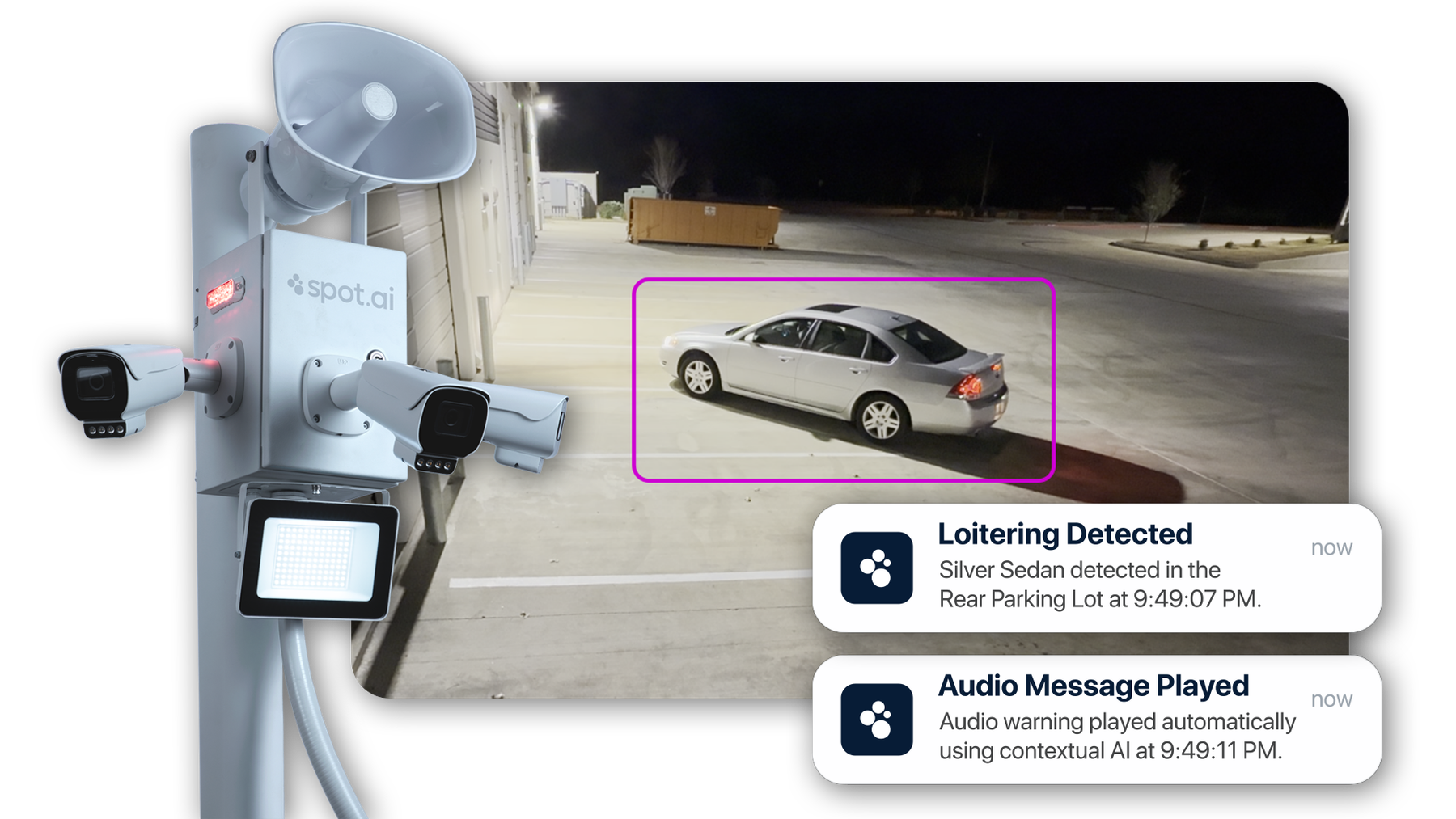
Mobile surveillance towers have sat in car lots and construction sites for twenty years: a mast, a camera, a strobe, a sign. They deter by looking like they might be watching. Most are not; they are motion sensors with a phone line to a monitoring centre that is drowning in false alarms.
The Remote Security Agent, which Spot AI launched in January 2025, is that mast with a different brain. The company's own framing at the time was that traditional security "is failing to adapt to the new reality," and the fix was "combining advanced AI with the proven deterrent power of security guards, while eliminating the limitations of both."
What it does differently
The distinguishing feature is what the company calls contextual talkdowns. Rather than a recorded "you are being watched," the system uses multi-object detection and context to say something appropriate to the situation: it "can distinguish between a delivery person and a potential intruder, responding accordingly." A person at a fence at 2 p.m. and a person at the same fence at 2 a.m. get different treatment.
Escalation is graduated. The CEO's letter to customers at launch described it: turn on the lights, play a verbal warning, ask on-site staff to call police, with the tone adjusted "from a gentle reminder during business hours to a firm warning after hours." Rules are set per property, per zone, per time of day, and the unit ties into the same system as the indoor cameras so a lot and a loading dock are one picture.
Why now
The letter cited the numbers the industry was quoting at the time: catalytic-converter thefts up 900 percent since 2019, vehicle theft up 25 percent, organised retail crime up 26.5 percent. Whatever the precision of those figures, the trend is what every fleet operator and dealer feels. Guards are expensive and scarce, and the places most exposed, the back of the lot, the fuel island, the site perimeter, are exactly where a $10-an-hour body is least likely to be posted.
The honest limits
A pole unit lives outdoors, and outdoors is where video AI is weakest. Solar, batteries, rain, glare, thermal at night, and the mast itself swaying in wind all degrade the picture. Partners deploying these units on trailers have wrestled with power and hardware reliability as much as with the model. And a deterrent that talks is a deterrent that can annoy: a false talkdown at a legitimate customer costs goodwill in a way a silent camera never did.
The design bet is that the talking is worth it. A camera that records a break-in has produced evidence. A camera that says "step away from the vehicle" while it is still a break-in attempt has produced a different outcome. That is the whole difference between surveillance and a guard, and the reason this box exists.