Stop calling it surveillance. Start calling it attention.
Surveillance records people to assign blame later. Attention notices what is happening now, mostly to keep them safe. The customers running video agents already talk about them the second way.
Every conversation about cameras and AI eventually arrives at the same word, and the word does a lot of damage. Surveillance means watching people in order to catch them. It implies a suspect, a file, a consequence after the fact. That is what the recorder era was for, and it is why nobody on a factory floor has ever loved a camera.
The systems being deployed now do something different, and the people running them describe it differently.
What a near-miss alert is for
At Unique Industries, a party-goods manufacturer with 450 employees across three shifts, the director of safety gets a notification when a forklift and a pedestrian come too close. "When we get an alert about a near-miss between a forklift and pedestrian, it's always legitimate," he told Spot AI. Nobody is punished by a near-miss alert. The point is that the next one does not become a collision. His summary: "Tech goes with safety. It's a help, not a hindrance."
At Primex Farms, the safety lead put the shift in one sentence: "Having cameras that talk back to you changes everything." A camera that talks back is not a witness for the prosecution. It is a colleague tapping you on the shoulder.
Trust is a design choice
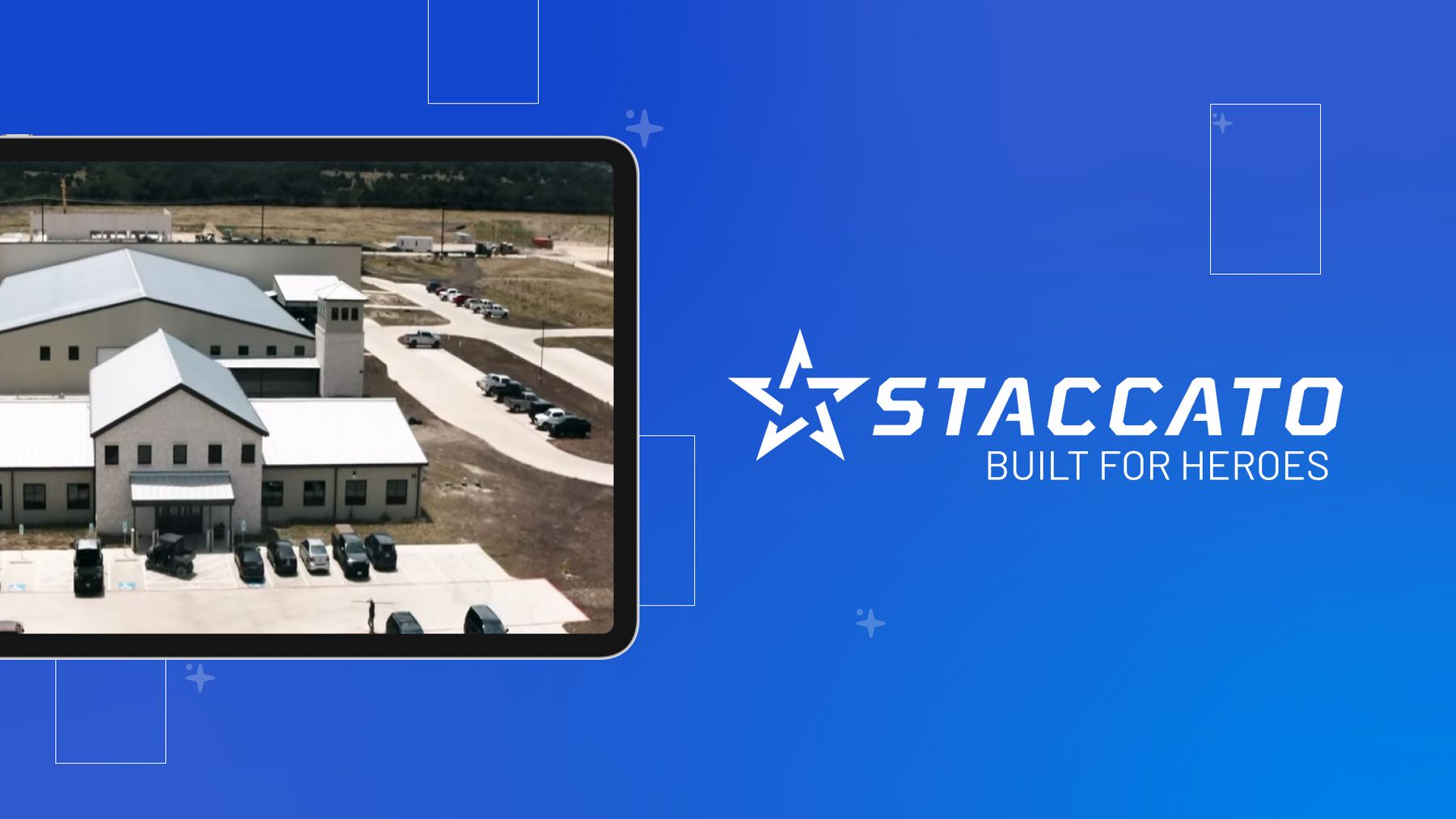
Staccato builds firearms on an 800-acre campus in Texas. Its director of technology, Mike Tiller, is blunt about the culture: "We don't have security guards or metal detectors - we trust our employees." What he wanted from AI was not more watching. It was context. "What impressed me was the system's ability to understand context," he said, and then the line every vendor should print on the box: "The technology has to serve a purpose beyond just having AI for AI's sake."
You cannot get there with surveillance. Surveillance is indifferent to context by design; it records everything so that someone can decide later. Attention is the opposite. It decides now, and it decides mostly in favour of the person in the frame.
The more employees see me tackling issues like theft, the less likely they are to try it themselves.
That is Mike Wimpy, who runs loss prevention across twelve McKeever grocery stores. Read it again. The value he describes is not catching people. It is being visibly present, "everywhere," as he puts it, so that the incident never happens. Deterrence is attention, not surveillance.
Why the word matters
Words set the defaults. Call the system surveillance and you will build it to retain everything, review it after harm, and treat the people in it as subjects. Call it attention and you build for the moment: short retention, fast decisions, an alert that reaches the person who can act, and a record that exists to prove what was prevented.
Spot AI's own head of customer success titled a recent essay "Passive surveillance is dead." He is right, but the replacement needs a name that is not a euphemism. Attention is the honest one. It is what a good supervisor gives a floor, what a good guard gives a lot, what a good nurse gives a ward. It has always been scarce. It is about to be abundant.