Let your AI coworkers watch video
Over ninety percent of security alerts are harmless. The case for spending human attention on the ten percent that are not, from the first edition of The Edge.
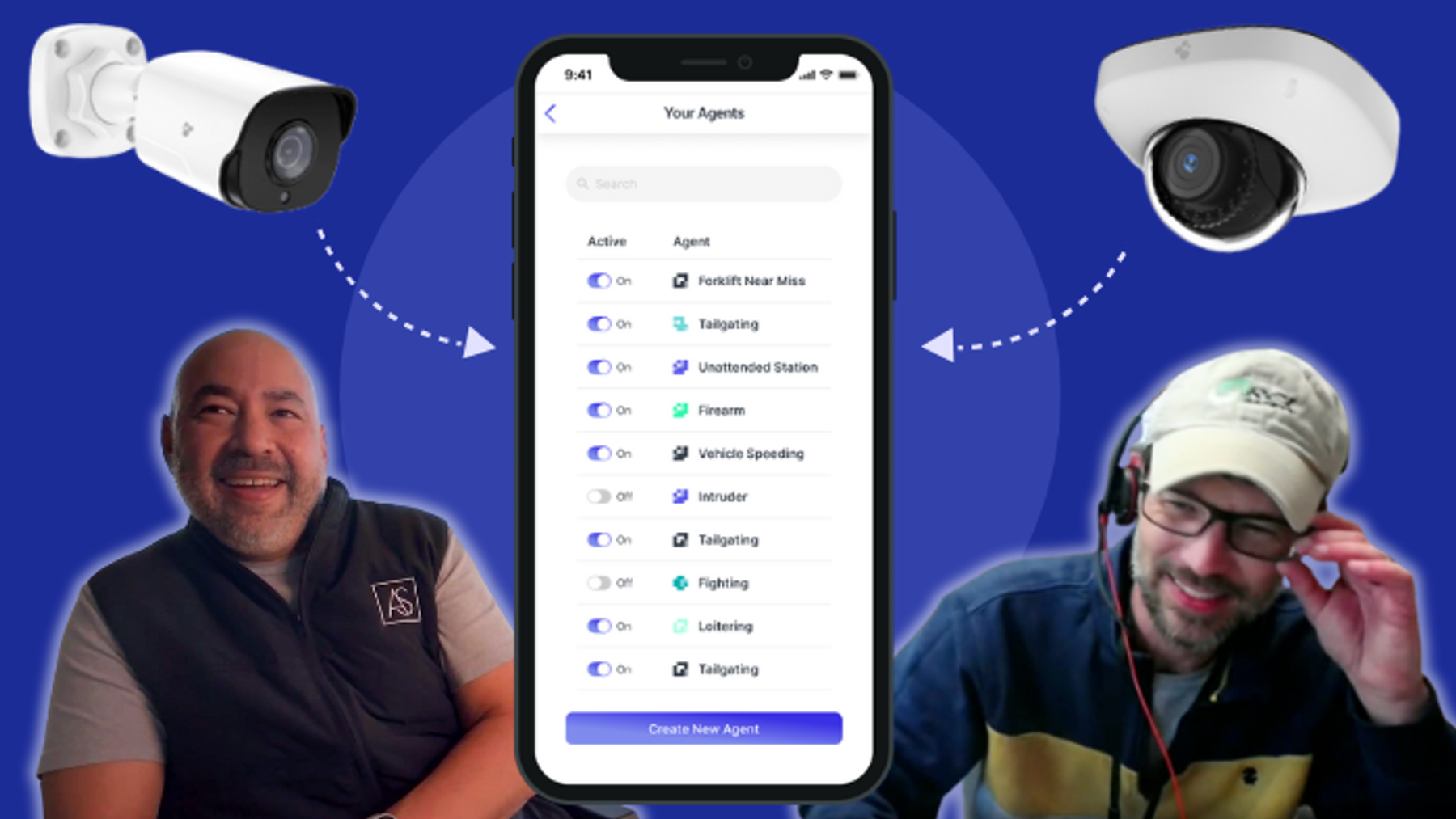
If you could watch every inch of your premises, what would you measure?
Human attention is costly. Security, operations and safety leaders know there are inefficiencies on their floor; they just can't afford enough eyes to catch all of them. Video AI is closing that blind spot. It is like a 24/7 analyst taking notes on every lot, job site, production line and point of sale, for roughly a dollar a day.
Cameras are becoming digital coworkers, analysing and acting on thousands of hours of video while people do high-value work. Here is what that shift looks like from inside.
Conserve human attention. Delegate to digital workers.
Watching hours of footage and combing through false alarms is low-value work. And over 90 percent of security alerts are harmless: think errant shopping carts or idling delivery trucks.
For decades we have used security cameras to capture incidents for humans to review later. That footage overload fatigues teams and wastes their time. Video is just a means to an end: safer, more productive spaces. Once cameras capture an incident, it is too late to intervene.
Our goal is to make sure people in critically important roles don't have to spend time idly watching video. They don't need more cameras, they need an AI workforce that does it for them.
That is Rish Gupta, Spot AI's CEO. Video AI now knows the difference between a stray shopping cart and a break-in, and it helps by intervening to prevent property damage and injuries. Without the harmless 90 percent splintering their attention, teams are focused, alert, and ready to act on the crucial 10 percent.
What it looks like in security
Vision AI knows the difference between a customer and a trespasser, and flags the behaviour as suspicious. Automation can trigger lights and a voice: "Attention: you, with the blue shirt and green backpack, please stop pulling those door handles and step away from the vehicle." If the person does not comply, the system knows when to escalate and pull in a human guard.
What it looks like on the factory floor
"In manufacturing, by auditing production lines, Spot AI can make sure a step that's meant to take five minutes doesn't actually take seven or eight," Rish explains. "At large companies, those gains compound to prevent millions of dollars in losses."
Vision AI audits 100 percent of production lines, examining whether processes and SOPs are running efficiently or where friction is holding back productivity. Without assistance, a skilled human team could cover at most 5 percent. With AI as a coworker, the plant manager's energy goes to fixing actual inefficiencies, not inferring the state of a whole facility from a sample.
In both cases, cameras become something people delegate to, not a cost centre that demands endless time.
The question to ask yourself
Where are you on this spectrum? How much of your team's attention goes to monitoring the routine 90 percent, and how much goes to the cases where human judgement is make-or-break?
Human expertise should flow toward high-stakes scenarios, not routine monitoring. We are exploring what that looks like, and we hope you come along for the ride.