Fifteen years looking for the bottleneck at the pay station
Glide Xpress studied fast-food drive-throughs trying to make its car washes faster. What finally showed it where cars stall was its own cameras.
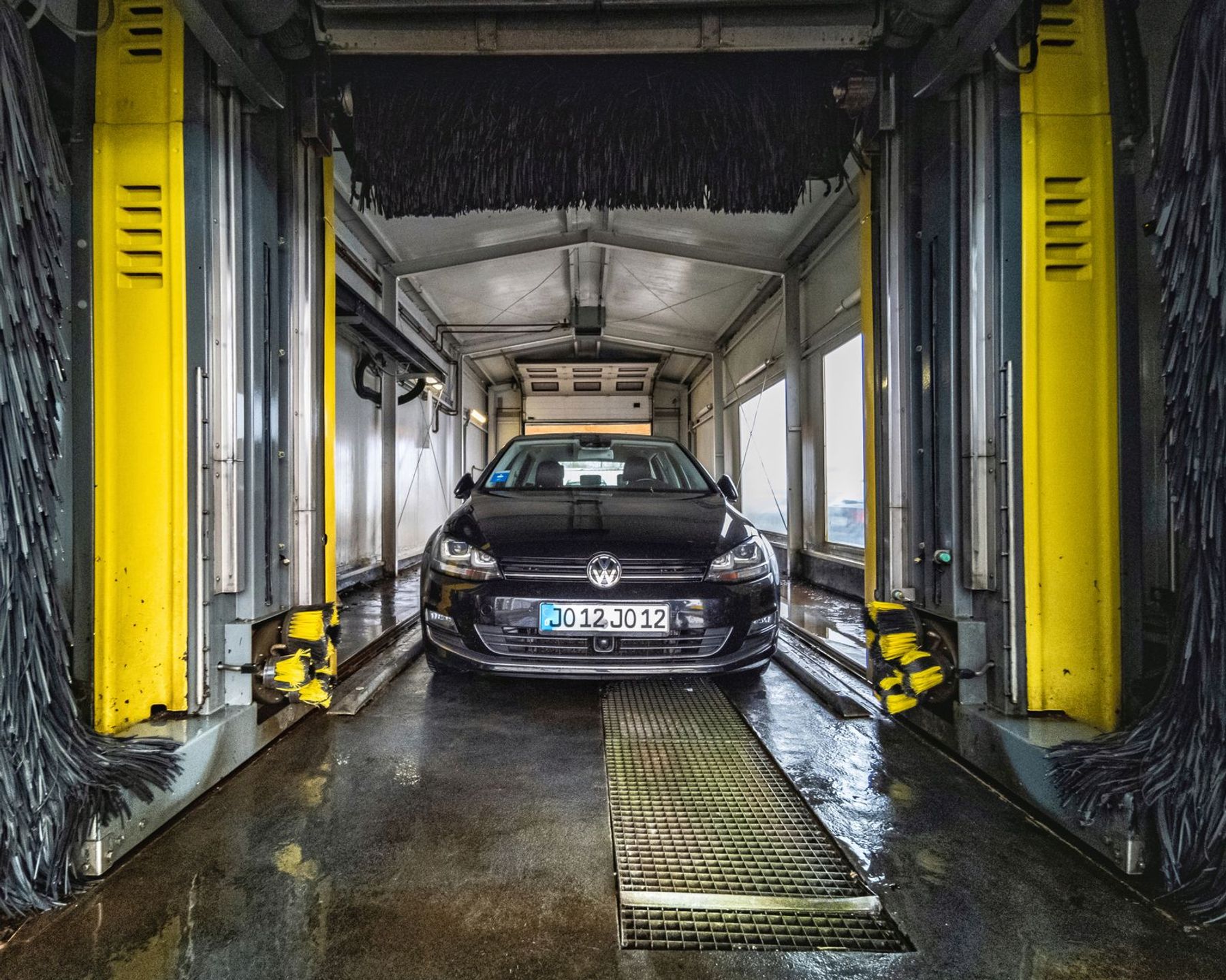
Glide Xpress Car Wash says its aim is to be the fastest car wash in the nation. It runs locations in Tennessee, Mississippi, Arkansas and Missouri, and according to Spot AI's published account its leadership spent nearly 15 years looking for technology that would improve vehicle processing time, including studying how fast-food chains run their drive-throughs.
Cars were losing time at the entrance, before they ever reached the tunnel.
Where cars stop
The account lists the usual reasons a line stalls at a car wash: a gate that does not open, a credit card that fails, a non-member driving into the members-only lane. Each costs seconds, and across a busy Saturday the seconds add up to cars.
What Glide Xpress lacked was data on any of it. It wanted to know how fast customers were entering the tunnels and how one location compared with another, so it had something better than instinct as it kept opening sites.
The measure it settled on is what Spot AI calls Vehicle Idle Time: how long a vehicle sits still in view of a camera. Pointed at the entrance, it told the company where bottlenecks were, how far apart vehicles were running, and, per the account, "how many more vehicles can be serviced each hour".
Shawn Peterson, EVP of Operations, is quoted after years of searching as "literally trying to not jump out of my seat."
This is game-changing stuff for us and the industry.
The second measure
The other half of the story is about staffing. A fast wash with nobody at the pay station to help is a slow wash. Glide Xpress, the account says, had no data on how busy given days were or whether staff were present to help customers, which produced inconsistent service.
The company turned on People Presence, which tells leadership when and where team members are on camera. The stated use is training: pulling footage of best practice, or of its absence, and showing it to staff.
Heath Owsley, Director of Operations, ties the two measures together.
From an operations standpoint, I'm able to know why a customer is waiting too long and this tells me if we're staffed enough or we have an opportunity to better train our team. Idle Time helps us identify potential issues before they become real issues.
Idle time shows that a customer waited; people presence shows whether anyone was on hand. Between the two, Owsley can tell whether the fix is a schedule change or a training session.
What the case study does not say
Spot AI's account of Glide Xpress publishes no percentages. There is no throughput figure and no before-and-after cars per hour. What it publishes is a description of two measurements and two executives saying the measurements changed how they work.
The absence is noticeable in an industry that usually markets on throughput, and it may simply mean the story was written early in the deployment. What is on the record is narrower: after 15 years of looking, Glide Xpress can measure how long a car sits at its own pay station. If you run a wash, do you know that number for yours?