The evaluation harness is the product
Frontier labs now spend more of their compute on post-training than on pre-training. For video AI, that means the winners will be whoever lets a customer measure and tune a model on their own footage.
Two years ago, almost all of a frontier lab's compute went into pre-training: building the base model. Today, by the estimates I have seen, more than half goes into post-training: fine-tuning, reinforcement learning from feedback, synthetic data, adaptation to a domain. Pre-training's share fell from roughly two thirds in early 2024 to under a tenth by the end of this year.
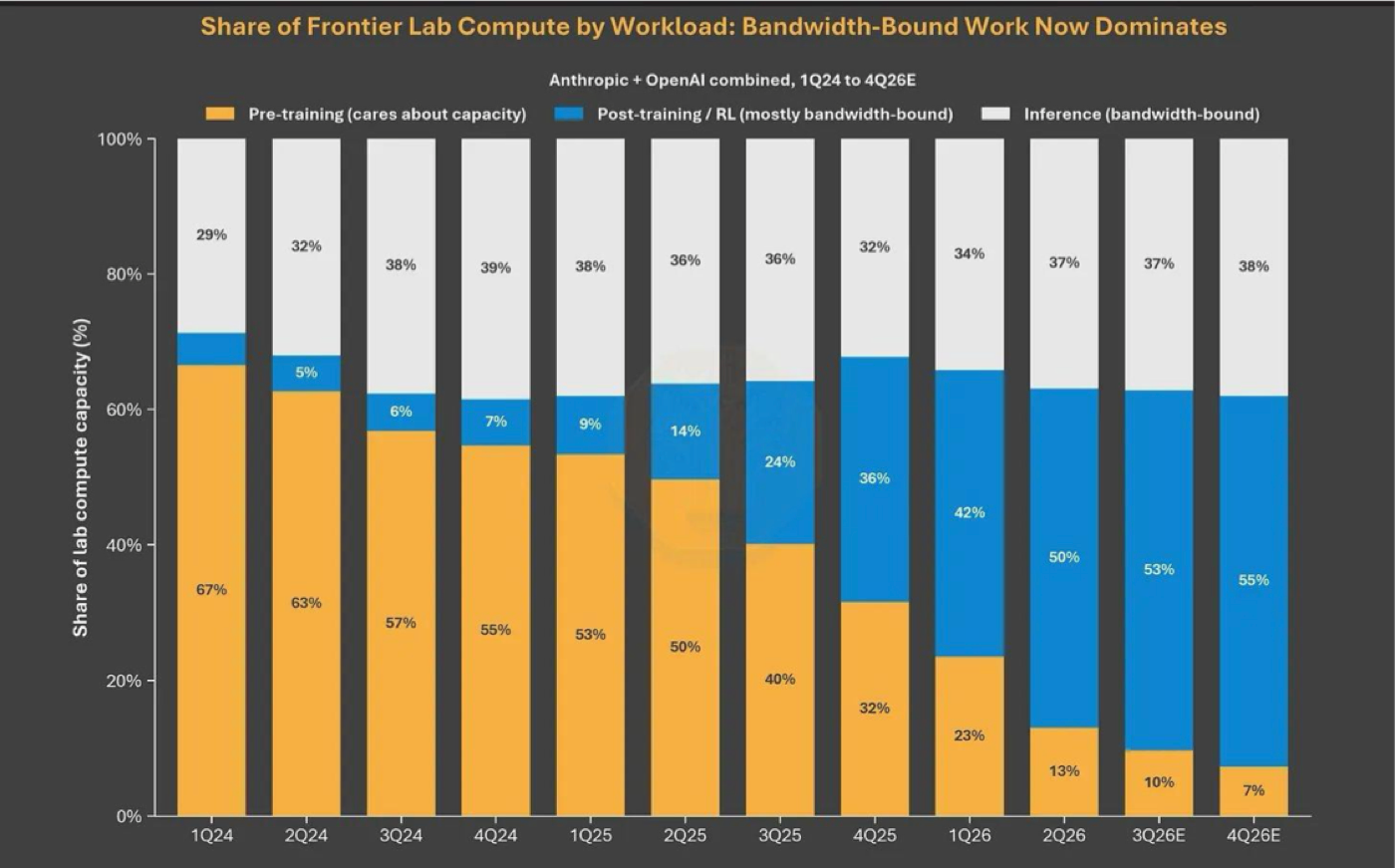
The reason is simple. Base models are good enough and, increasingly, stable. The advantage moved to what you do with one afterwards. I think this is the most important fact about video AI as a category, and most of the industry has not absorbed it yet.
Every customer says the same sentence
Anyone who sells vision AI hears it within the first month: your model is great in the demo, but it misses things in our environment. The customer is not wrong. A model trained on the world's cameras has never seen their loading dock at 4 a.m. or the particular way their forklifts round the corner. The demo ran a base model. What the customer needs is that model post-trained on their own footage.
Today almost no vendor can give it to them. Fine-tuning happens, when it happens, as a services engagement: the vendor's engineers collect clips, label them, train, and ship a new version, and nobody outside the vendor can say how much better it got. Most sites never get that far.
What a harness is
An evaluation harness is the plumbing that makes post-training something a customer can buy and run themselves. The customer uploads or marks up clips from their own cameras. They see how the standard model performs on those clips, scenario by scenario: where it catches the forklift near-miss and where it misses the fall. They run a tuning pass on their own footage. They measure the result on their own data, set the accuracy bar they need, and push the tuned model to their cameras. Then they label more, and the number moves again.
Internally the same machinery answers an unglamorous question every AI company has: did the new model version make anything worse? A model that improves on theft can regress on accident detection. A harness tells you on a Tuesday afternoon, before the version ships. Otherwise you find out in production, after somebody's alert did not fire.
Why this is where the category is going
Three reasons, and none of them are specific to any vendor.
The customer gets a number. Vision AI has been sold on demos and trusted on faith. A harness turns "it works in our environment" into a measurement the customer took themselves.
The vendor gets a flywheel. Every tuning run on a customer's footage teaches something about that kind of scene, and the lessons compound into better base models for the next customer. In a market where base models are converging, this is the durable edge.
And the relationship changes. A customer who has labelled a thousand clips and tuned a model against them has built an asset. It is theirs, and it is not portable to a competitor's platform, which is exactly why they will expect to own and inspect it.
The order of operations
If I were advising anyone building in this space, I would start with evaluation and leave tuning for later. Give customers the dashboard that shows their gap first. Once someone sees that the standard model catches 70 percent of what matters on their site, they will ask for the tuning themselves. Self-serve fine-tuning, retraining pipelines, model versioning and rollback come after, once customers are asking for them.
The frontier labs have already voted with their compute budgets: pre-training's share went from two thirds to under a tenth in under three years. I expect video AI to follow, one customer's footage at a time.